|

| |
EXPLORING DIFFERENCE
Please click here to subscribe to The
Way, Electronic subscribers, click here to download this issue. You will need the password that we e-mailed to you. Contents The Roman Catholic Church and African Religions: A Problematic Encounter In African Christianity today, the colonialist past is a matter of guilt. Instead we practise 'inculturation', and express Christianity in ways somehow sensitive to the values of African culture. But perhaps 'inculturation' is as patronising as colonial Christianity was oppressive. A young theologian from Cameroon argues that today's Africa requires us to think in ways that are at once quite new and yet deeply traditional. Download this article in
Word format by clicking here, Monastic Life, Interreligious Dialogue and Openness to the Ultimate: A Reflection on the Tibhirine Monks' Experience In 1996, seven Trappist monks were murdered in Algeria. Christian Salenson considers the witness of the Tibhirine monks and how it illustrates the deep connections between a monastic vocation and a commitment to interreligious dialogue. Exile and Virtual Space: The New Frontiers in Interreligious Dialogue Globalisation and the internet have radically altered the conditions under which interreligious dialogue occurs today, and are enabling the process to move forward in some startling new ways. A French Jesuit working in China explores the future of Christian mission in this changed context. Mary, Daughter of Sion: The Mother of Jesus in the Scriptures Christian tradition has grown to think of Mary in a wide variety of ways. In the New Testament, she appears principally as the Daughter of Sion, the heart of the holy remnant of Israel around which God will gather all the nations. When Christians honour Mary, they are acknowledging too the intimate dependence of their faith on the Israelite heritage. Ignatius and the Turks Ignatius' own openness to interreligious dialogue was limited. 'The Turks' appeared to him simply as a threat. We look at two letters in which he advocates that Charles V mount a large fleet to protect Italy and Spain against the prospect of Turkish conquest. The 'Catholic Church' Subsists in the 'Catholic Church' One of Vatican II's most creative teachings was the suggestion that the Church of Christ is broader than the Roman Catholic Church; the two are not simply to be identified. Peter Knauer suggests that the Church in which we profess our belief in the Creed exists wherever people believe in Christ as the Son of God. Evangelical Spirituality and the Church Catholic The rich evangelical tradition of spirituality has focused on moments of conversion, on the Word of God in the Bible, on the cross and on active missionary commitment. A Baptist historian shows how these aspects of evangelicalism have been nourished throughout its history by Catholic spiritualities. Book Reviews
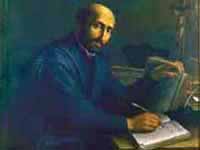
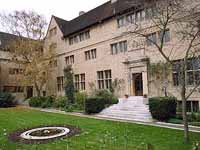
on daily life in Ignatius’
house
on a new dictionary of spirituality and on the Jesuit Refugee Service on Paul’s letters to the Philippians and to Philemon on restoring Mary’s magnificence on Ignatian discernment and the commitment to justice on interviews with contemporary theologians on what it is to risk being Church on Teilhard de Chardin’s ‘The Mass of the World’ on a biography of Metropolitan Anthony Bloom
From the Foreword A godly encounter with religious diversity is one that renounces all attempts to dictate the terms of engagement. Instead, it lets a common truth emerge gently at its own pace. Much in this issue of The Way seeks to encourage the dispositions required for an authentic patience in this regard. Ludovic Lado raises radical questions about the assumptions behind attempts at 'inculturated' Christianity in Africa. Christian Salenson evokes how the Trappist community in Algeria, most of whose members were murdered in 1996, engaged with Muslims, while Peter Knauer retrieves Vatican II's ground-breaking assertion that the true Church of Christ professed in the creed is wider than the Roman Catholic Church as it currently exists. It is within such openness to difference that one can rightly appreciate the convergences that there are. Ian Randall points us to the riches of evangelical spirituality, evoking both its distinctive stresses and its affinities with more Catholic traditions, while Dieter Böhler shows how an engagement with the Jewish roots of Christianity can enrich and renew conventional Catholic devotion to Mary.It is of faith that 'all things work together for good for those who love God' (Romans 8:28). But the engagement with religious otherness is not always a matter of expansive exhilaration. As Rowan Williams once put it, the world contains not just 'well-meaning agnostics'-or indeed enlightened devotees of other faith traditions-but also 'totalitarian nightmares … nuclear arsenals, labour camps and torture chambers'. In their openness to the Muslim world of Algeria, the Trappist martyrs were rendering themselves vulnerable to violent attack; and we can easily forget that Ignatius and the early Jesuits lived, not very creatively, with the threat of being overwhelmed by the Turks. To explore the world's differences is also to engage with the world's evil. It is only in hope and trust that we can move forward in this enterprise-hope not only in the Spirit's expansive creativity, but also in the power of God to bring good out of evil and life out of death. Philip Endean SJ
Please click here to subscribe to The
Way, | ||
| |


|